
The Centered Stage Methodology
Step outside the story to see the story.
The Centered Stage Methodology is an experiential approach to personal and professional development that draws upon the creative processes of theatre, storytelling, directing, improvisation, embodiment and coaching.
It begins with a simple question:
What becomes possible when we stop identifying exclusively with the character we are playing and begin looking at our lives through the eyes of the director?
The Actor, the Writer, the Director and the Audience
Four perspectives we can bring to our own lives — each offering a different kind of awareness.
The Actor
The part of us that experiences the story from within.
We respond to our given circumstances, emotions, relationships, expectations and motivations. We play different roles in different scenes, often without consciously recognising the scripts guiding our actions.
The Writer
The part of us that gives meaning to experience.
We create narratives about who we are, what has happened to us, what we believe is possible and what we expect from the future. We can learn to question those narratives and imagine alternative ones.
The Director
The part of us that steps back to observe the whole story.
The director notices recurring themes, character dynamics, motivations, choices and possibilities. Rather than reacting automatically, the director creates space for reflection, experimentation and intentional action.
The Audience
The part of us that learns to witness.
We cannot control every character, circumstance or outcome. Sometimes growth means stepping back, appreciating the unfolding story and recognising what is ours to influence and what is not.
Six Core Tools
Creative tools for conscious living.
01
Character Analysis of Your Given Circumstances
Before you rewrite the story, understand the character.
Every actor begins with character analysis. What are this character's given circumstances? What experiences have shaped them? What do they want? What are they afraid of? What beliefs, motivations and relationships influence their choices? We can bring that same curiosity to ourselves. Through narrative reflection, character exploration and examination of recurring roles, we begin to notice the stories that have shaped our identity.
Questions we might explore
- What roles was I given before I was old enough to choose them?
- What expectations have I internalised?
- What patterns do I repeatedly find myself living?
- What is the underlying motivation, or super-objective, driving my choices?
- Which roles still serve me, and which am I ready to reconsider?
This work can be applied to personal identity, professional development, leadership and team dynamics.
02
Somatic Spotlight
What is your body telling you about the role you are playing?
Actors learn to recognise how a character's internal experience influences their posture, movement, voice, breath and presence. Somatic Spotlight brings that curiosity into everyday life. Through guided movement, embodied awareness, breath, reflection and creative exploration, we notice how different roles and emotional experiences may be expressed through the body.
Questions we might explore
- What does confidence feel like in your body?
- What happens to your body when you feel responsible for everyone in the room?
- How does your presence shift when you give yourself permission to take up space?
This practice invites greater awareness of the relationship between our internal experience and our external expression.
03
The ReScripting Method
A familiar script is not the only script available to you.
When writers develop stories, they identify themes, motivations, obstacles, character arcs and meaningful choices. The ReScripting Method applies these creative principles to our lived experience. We explore the narratives we have inherited, the patterns we repeat and the assumptions that influence our decisions. Then we begin to imagine alternatives.
Questions we might explore
- What might happen if we responded differently?
- What choices would move us towards the life we want to create?
- What would it mean to rehearse a new way of showing up before we encounter the next scene?
ReScripting is not about denying the past or pretending we can control every outcome. It is about becoming more conscious of the choices available to us now.
04
Scene Change
Sometimes changing the perspective changes what becomes possible.
When a director wants to explore a scene differently, they might change the positioning of the actors, introduce a new perspective, shift the environment or experiment with a different approach. Scene Change brings that process into personal and professional development. Through experiential exercises, role exploration and collaborative reflection, we examine the dynamics of a situation from multiple perspectives.
Questions we might explore
- What happens when we step into another perspective?
- What becomes visible when we change our position within the scene?
- What possibilities emerge when we experiment with a different response?
This can help us explore difficult conversations, relationships, workplace challenges, leadership dynamics and recurring interpersonal patterns.
05
Healing Stages
Some stories need to be witnessed before we know how to move forward.
The theatre can provide a powerful creative space for expressing experiences that are difficult to communicate through ordinary conversation. Healing Stages draws on carefully facilitated storytelling, symbolic exploration, role work and reflective practices to help participants explore the meaning of emotionally significant experiences.
Questions we might explore
- What unmet needs are present in this story?
- What different perspectives might offer new understanding?
- What would greater agency look like moving forward?
The intention is not to change what happened in the past, relive traumatic experiences or replace professional psychological care. Participation is always voluntary, with clear boundaries and opportunities to pause or step away.
06
Plot Twists
Life rarely follows the script we imagined.
Every compelling story contains moments that disrupt the expected narrative. In our own lives, those moments might arrive through a career change, relationship transition, unexpected opportunity, loss, uncertainty or a new direction we had not previously considered. Plot Twists uses creative thinking, improvisation and reflective exploration to help us work with the unexpected.
Questions we might explore
- How do we acknowledge the reality of a situation without allowing it to become the only possibility?
- What support do we need in this moment?
- What possibilities might exist beyond our original expectations?
Drawing upon the improvisational principle of "Yes, and…", we explore how to work with the unexpected rather than against it.
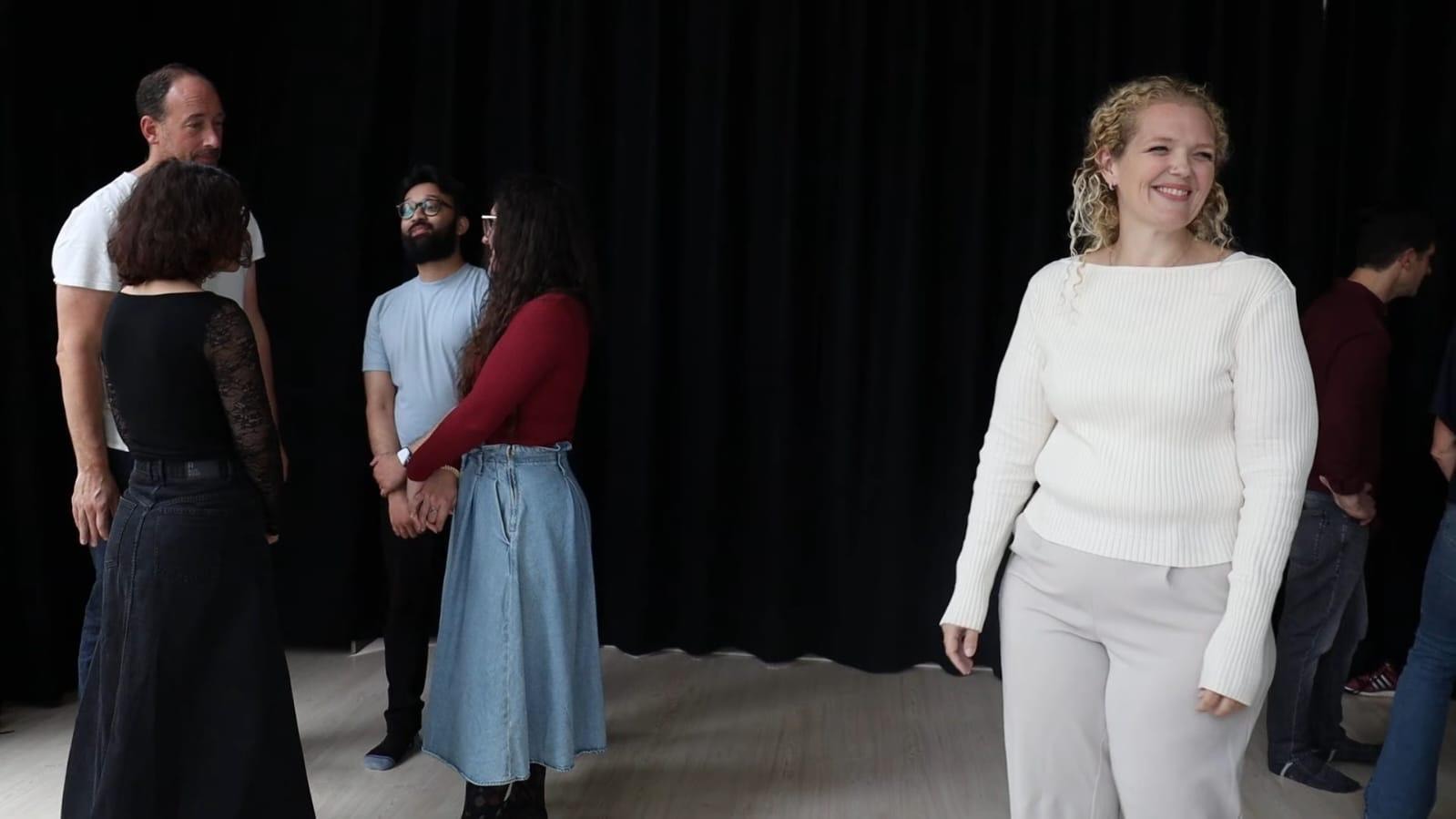
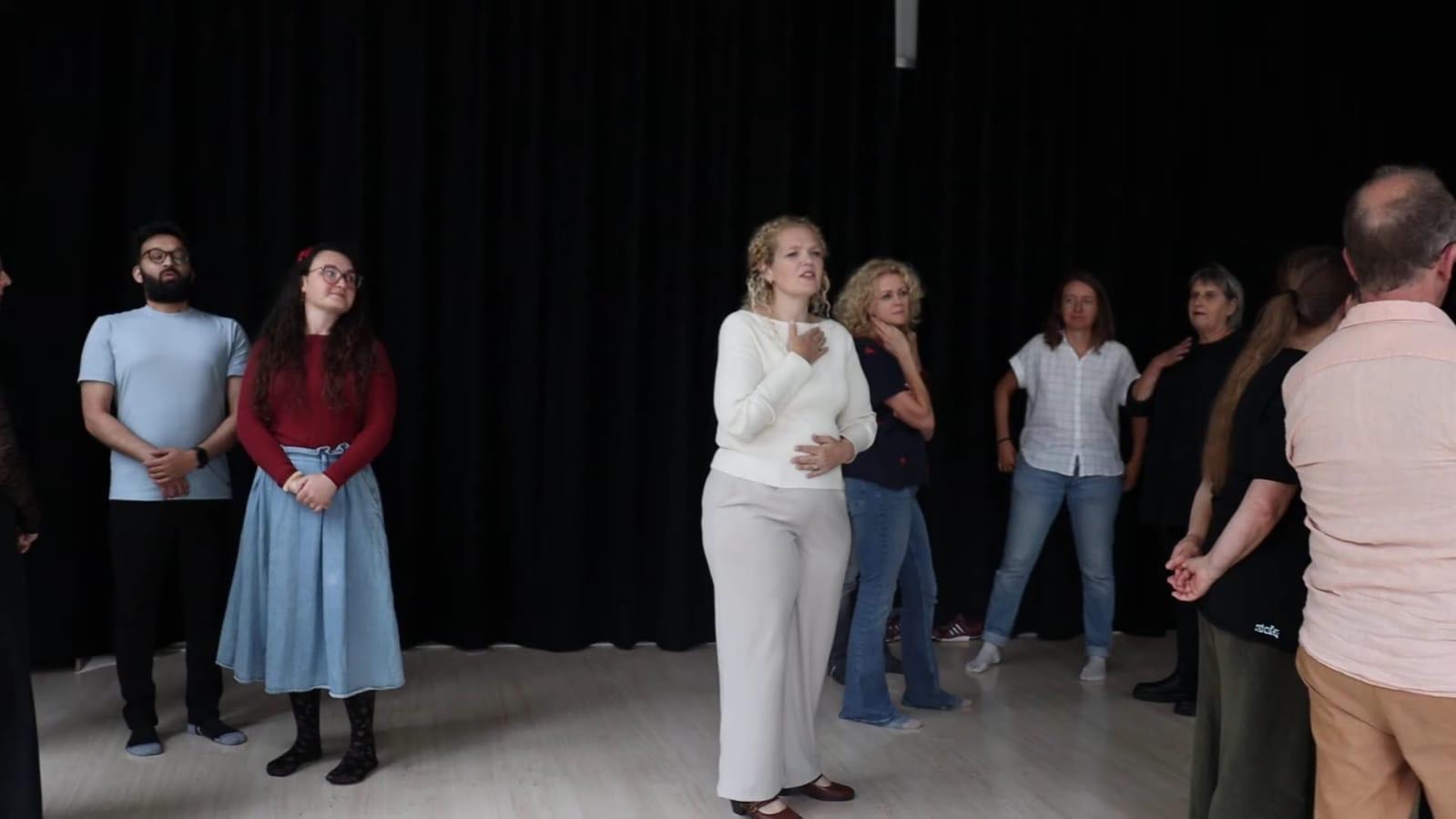
Reflection. Exploration. Rehearsal. Integration.
No theatre experience is required. The work is adaptable to individual coaching, group programmes, leadership development and educational environments.
- Meaningful conversation and coaching.
- Narrative and character analysis.
- Reflective writing.
- Creative visualisation.
- Applied theatre practices.
- Improvisation and experiential exercises.
- Embodied awareness.
- Collaborative exploration.
- Practical integration into everyday life.
Creating a Brave Space
Centered Stage is grounded in choice, curiosity, respect and participant agency. We use the following theatrical language to support participation:
Button
Pause whenever you need time to reflect, ask a question or reconnect with yourself.
InterMission
Step away from an exercise or end the exploration for today.
Fences
Identify subjects or experiences you do not wish to explore.
Gates
Choose whether to open or close a boundary as the exploration unfolds.
Coaching and creative development are not substitutes for psychotherapy, medical treatment or other specialised professional care.